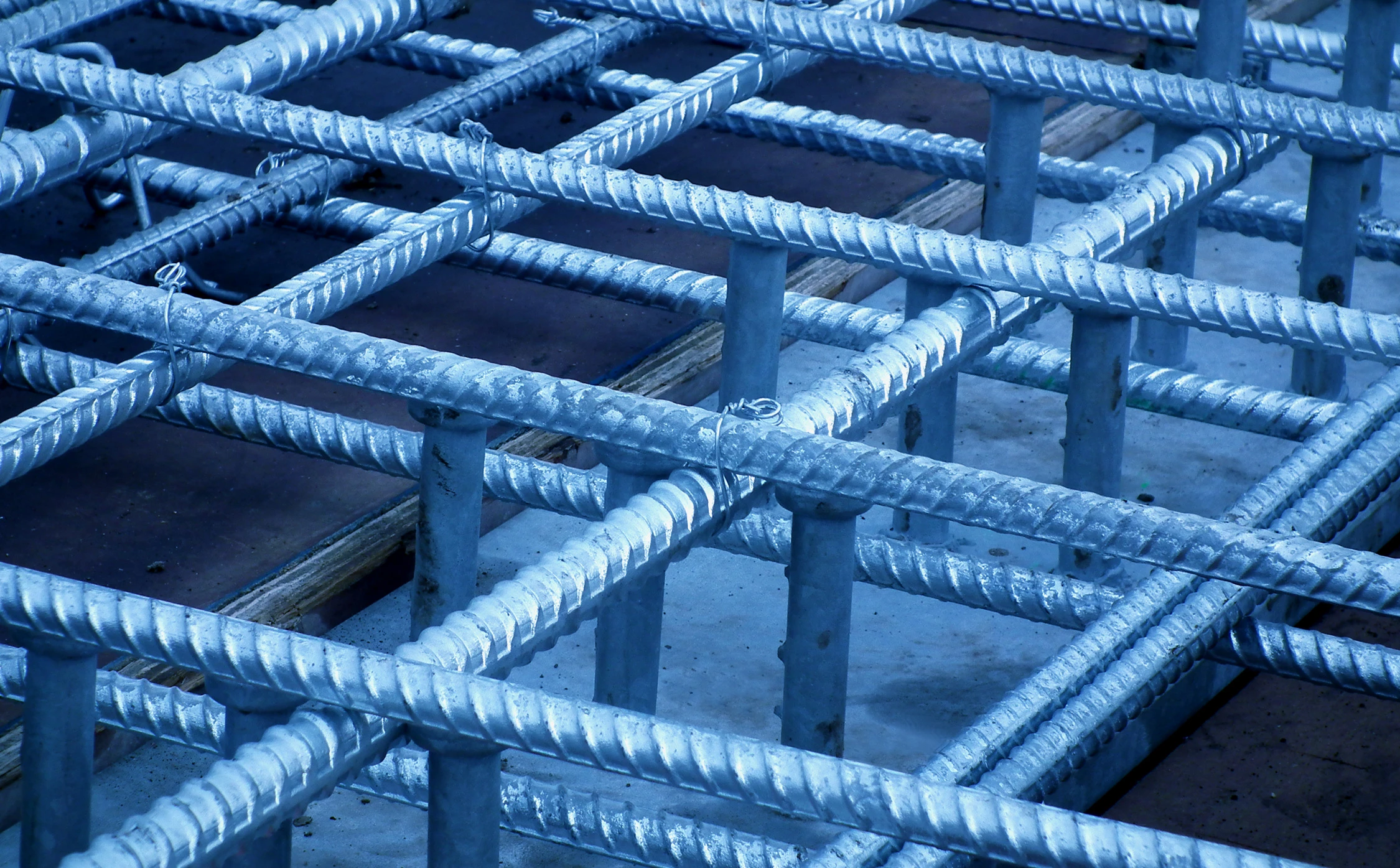
Throgs Neck Bridge
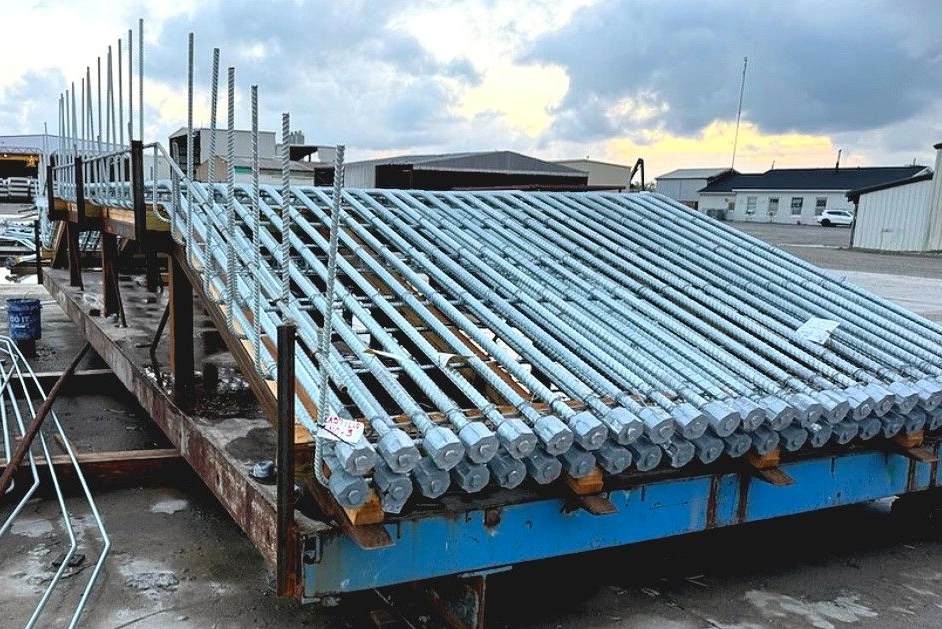
When corrosion is the challenge, GalvaBar® is the advantage.
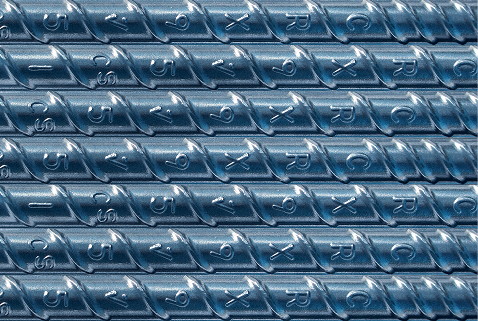
GalvaBar® is continuously galvanized reinforcing steel that combines the proven protection of zinc with CMC’s modern, highly automated manufacturing process. The result is a durable, uniform zinc alloy coating that stands up to corrosive environments—without sacrificing strength, flexibility, or fabricability. Easy to bend, cut, and place using standard practices, GalvaBar® fits seamlessly into existing supply chains while delivering dependable, cost-effective protection that helps extend the life of concrete structures.


WHY CMC GALVABAR
Superior corrosion protection
Our continuous, uniform pure zinc coating delivers longer-lasting corrosion resistance than traditional hot-dip galvanized rebar.
Reduced cracking and longer service life
Pure zinc corrosion products are less expansive than iron or zinc-iron products, resulting in lower concrete stress, reduced cracking, and extended structural life..
Consistent, repeatable performance
A controlled CGR process produces a metallurgically bonded coating with reliable thickness and performance, independent of steel chemistry.
Sustainable and fabrication-friendly
Manufactured through a VOC-free process that avoids hydrogen embrittlement concerns, GalvaBar supports sustainable construction and safe field adjustments.
Proven and readily available
Backed by FHWA-supported research and trusted by DOTs, GalvaBar® is stocked for fast turnaround and delivery in days, not weeks.
What is GalvaBar?
GalvaBar is continuously galvanized rebar (CGR) with a pure zinc coating that is highly adherent, impact resistant, and fully formable without peeling. While continuous galvanizing has long been used for steel sheet
and wire, it is a newer process for rebar.
Is there a specification for GalvaBar?
Yes. ASTM A1094/A1094M for continuous hot-dip galvanized rebar and ASTM A1055/A1055M for zinc and
epoxy dual-coated rebar.
Where can I get GalvaBar?
Through CMC mills, fabrication facilities, and distribution partners. Available in ASTM A615, A706, and
A1035, grades 60–100, in lengths up to 60’+. Contact galvabar@cmc.com or your CMC sales representative.
Will I be billed for extra weight due to zinc coating?
No. GalvaBar is billed at theoretical black bar weight with no added zinc pickup or environmental fees.
What lengths are available?
Typically 20’, 40’, and 60’. Custom straight lengths from 20’ to over 64’ are also available.
Why use material longer than 40’?
Longer or job-specific lengths reduce yield loss on projects with longer bars.
What is the lead time?
Common sizes are stocked for quick shipment. Special sizes and grades depend on mill availability, with nationwide warehouse support for just-in-time delivery.
How much does GalvaBar cost?
Comparable to epoxy-coated rebar and significantly less than stainless, fiberglass, or other non-ferrous options—while offering the lowest life-cycle cost.
How long will GalvaBar last?
FHWA studies show GalvaBar meets 100-year service life requirements and is interchangeable with ASTM A767.
Will GalvaBar peel or flake when bent?
No. It withstands tight bends without peeling. No special fabrication equipment is required—
handle it like black bar.
Will I have more scrap or drop?
Only a slight increase, if any. GalvaBar can be designed like uncoated rebar and typically requires less
steel than epoxy or stainless options.
Is embrittlement a concern?
No. The process does not affect mechanical properties, even for high-strength grades.
Why should fabricators quote galvanized projects?
GalvaBar opens new markets with higher-margin opportunities, simpler logistics, shorter lead times,
and no special shop equipment.
How does GalvaBar help in my shop?
It’s clean to work with, doesn’t peel or shed scale, reduces machine wear, and minimizes cleanup time.
Can epoxy be applied over GalvaBar?
Yes. ASTM A1055/A1055M zinc and epoxy dual-coated rebar is available for extreme environments.
Note “dual coat” on the purchase order.
Is GalvaBar suitable for precast or tilt-up construction?
Yes. Zinc coating protects reinforcement where cover is reduced or cracking is likely.
Do you offer lunch-and-learn presentations?
Yes. Contact galvabar@cmc.com.
GalvaBar - Continuous Galvanized Rebar - Pure Zinc, Pure Innovation
Whitepaper supported by studies from Tran-SET, The University of Kansas,
The University of Akron and Texas A&M University (2021)
2019 Trans-Set Seminar
Texas A&M Engineering Experiment Station - Center for Infrastructure Renewal (2019)
CIR Preliminary Report - Galvanized Rebar
Texas A&M
Structural and Corrosion Performance of Continuous Galvanized Rebar (CGR)
Dr. Anil Patnaik, The University of Akron (2019)
Corrosion-Induced Concrete Cracking for Uncoated and Galvanized Reinforcing Bars
Dr. Matthew O'Reilly, Omid Fashadfar, David Darwin, JoAnn Browning and Carl E. Locke Jr.,
ACI Materials Journal (2018)
Galvanized Reinforcement: Recent Developments and New Opportunities
Stephen Ross Yeomans, University of New South Wales (2018)
Life Cycle Assessment & Life Cycle Cost Analysis of a Reinforced Concrete Bridge Deck
Thinkstep, 2015
Uniform and local corrosion characterization and modeling for long-term exposure of different rebars used for RC elements in the presence of chloride conditions
D. Narayanan, Y. Lu, A. Okeil, H. Castaneda, EUROSTRUCT (2021)
Evaluating the Performance of Existing Reinforcement for Oklahoma Bridges
Dr. David Darwin, Dr. Matthew O'Reilly, Pooyah Vosough Grayli, Dr. Julie Ann Hartell,
Oklahoma Department of Transportation (2020)
Corrosion Management System of Regional Reinforced Concrete (RC) Bridges
H. Castaneda and A. Okeil, Tran-SET (2020)
Galvanized Reinforcement in Bridge and Coastal Construction
Stephen R. Yeomans, IABSE (2019)
This form can help suppliers submit substitution requests for GalvaBar® (ASTM A1094) on projects specifying hot-dip galvanized rebar.
DOWNLOAD FORM
Subject: CGR A1094 for A767 Substitution letter
RE: [Project Title]
[Supplier Name] will be supplying fabricated reinforcing to [Contractor Name] for use on the above-mentioned project. We believe that one of the goals of project delivery is to explore the use of alternative construction methods and materials that will meet all the necessary requirements for the project, while at the same time delivering a high-quality structure at equal or better value to the project owner.
[Supplier Name] requests that [Contractor Name] and [Project Owner (State/DOT/etc.)] consider the use of an alternate galvanizing method, ASTM A1094 Continuously Hot-dipped Galvanized Reinforcing, for reinforcing on this project, as it has several benefits when compared to traditional galvanized reinforcement products.
ASTM A767 Hot-Dipped Galvanized Reinforcing is currently one of the standard reinforcing corrosion protection products specified for [Project Title].
Galvanized Reinforcing bars are fabricated from uncoated rebar stock at a fabrication facility that is then shipped to a galvanizer to be dipped. From the galvanizer the material is retagged, reloaded and then shipped to the jobsite.
There are several challenges associated with this multi-step process that can be detrimental to project cost and schedule:
Rebar is handled several times at the galvanizer which increases the chance to damage, loss and misplacement.
Fabrication tags are removed for the galvanizing process and then bundles are retagged, sometimes incorrectly, which can cause confusion by field installation crews.
The cost and time associated with trucking uncoated material to a galvanizer can be significant – lead times are often two weeks from the time the uncoated rebar leaves the fabrication facility.
ASTM A1094 is galvanizing where rebar is coated continuously before fabrication. A continuous process allows for much better control of the thickness of the galvanized coating, resulting in a thinner pure zinc coating that can be bent after processing without cracking or peeling.
The fabrication shop will access readily available stock of continuously galvanized bars in stock lengths that can be cut, bent and shipped directly to the jobsite once fabricated. The coating on the cut ends is patched with a zinc-rich coating, like the process used with hot-dip galvanized rebar (ASTM A780). The use of Continuously Galvanized Reinforcing eliminates the challenges associated with hot dipped galvanizing, decreases lead times and results in a higher quality end-product for the owner.
We at [Name Here] believe provides the [Owner, General Contractor, Installer] with significant corrosion protection benefits when compared to Hot-Dip Galvanizing, including ease of fabrication, improved lead time and overall quality. I have included product data for Continuously Galvanized Reinforcing for your review.
Thank you for your consideration. The substitution of Continuously Galvanized Reinforcing will be beneficial to the [Owner, General Contractor, Installer and Fabricator] involved in this project.
For additional information and downloadable resources, visit www.cmc.com/galvabar.
This form can help contractors submit substitution requests for GalvaBar® (ASTM A1094) on projects specifying hot-dip galvanized rebar.
Subject: CGR A1094 for A767 Substitution letter
RE: [Project Title]
[Supplier Name] will be supplying fabricated reinforcing to [Contractor Name] for use on the above-mentioned project. We believe that one of the goals of project delivery is to explore the use of alternative construction methods and materials that will meet all the necessary requirements for the project, while at the same time delivering a high-quality structure at equal or better value to the project owner.
[Supplier Name] requests that [Contractor Name] and [Project Owner (State/DOT/etc.)] consider the use of an alternate galvanizing method, ASTM A1094 Continuously Hot-dipped Galvanized Reinforcing, for reinforcing on this project, as it has several benefits when compared to traditional galvanized reinforcement products.
ASTM A767 Hot-Dipped Galvanized Reinforcing is currently one of the standard reinforcing corrosion protection products specified for [Project Title].
Galvanized Reinforcing bars are fabricated from uncoated rebar stock at a fabrication facility that is then shipped to a galvanizer to be dipped. From the galvanizer the material is retagged, reloaded and then shipped to the jobsite.
There are several challenges associated with this multi-step process that can be detrimental to project cost and schedule:
Rebar is handled several times at the galvanizer which increases the chance to damage, loss and misplacement.
Fabrication tags are removed for the galvanizing process and then bundles are retagged, sometimes incorrectly, which can cause confusion by field installation crews.
The cost and time associated with trucking uncoated material to a galvanizer can be significant – lead times are often two weeks from the time the uncoated rebar leaves the fabrication facility.
ASTM A1094 is galvanizing where rebar is coated continuously before fabrication. A continuous process allows for much better control of the thickness of the galvanized coating, resulting in a thinner pure zinc coating that can be bent after processing without cracking or peeling.
The fabrication shop will access readily available stock of continuously galvanized bars in stock lengths that can be cut, bent and shipped directly to the jobsite once fabricated. The coating on the cut ends is patched with a zinc-rich coating, like the process used with hot-dip galvanized rebar (ASTM A780). The use of Continuously Galvanized Reinforcing eliminates the challenges associated with hot dipped galvanizing, decreases lead times and results in a higher quality end-product for the owner.
We at [Name Here] believe provides the [Owner, General Contractor, Installer] with significant corrosion protection benefits when compared to Hot-Dip Galvanizing, including ease of fabrication, improved lead time and overall quality. I have included product data for Continuously Galvanized Reinforcing for your review.
Thank you for your consideration. The substitution of Continuously Galvanized Reinforcing will be beneficial to the [Owner, General Contractor, Installer and Fabricator] involved in this project.
For additional information and downloadable resources, visit www.cmc.com/galvabar.