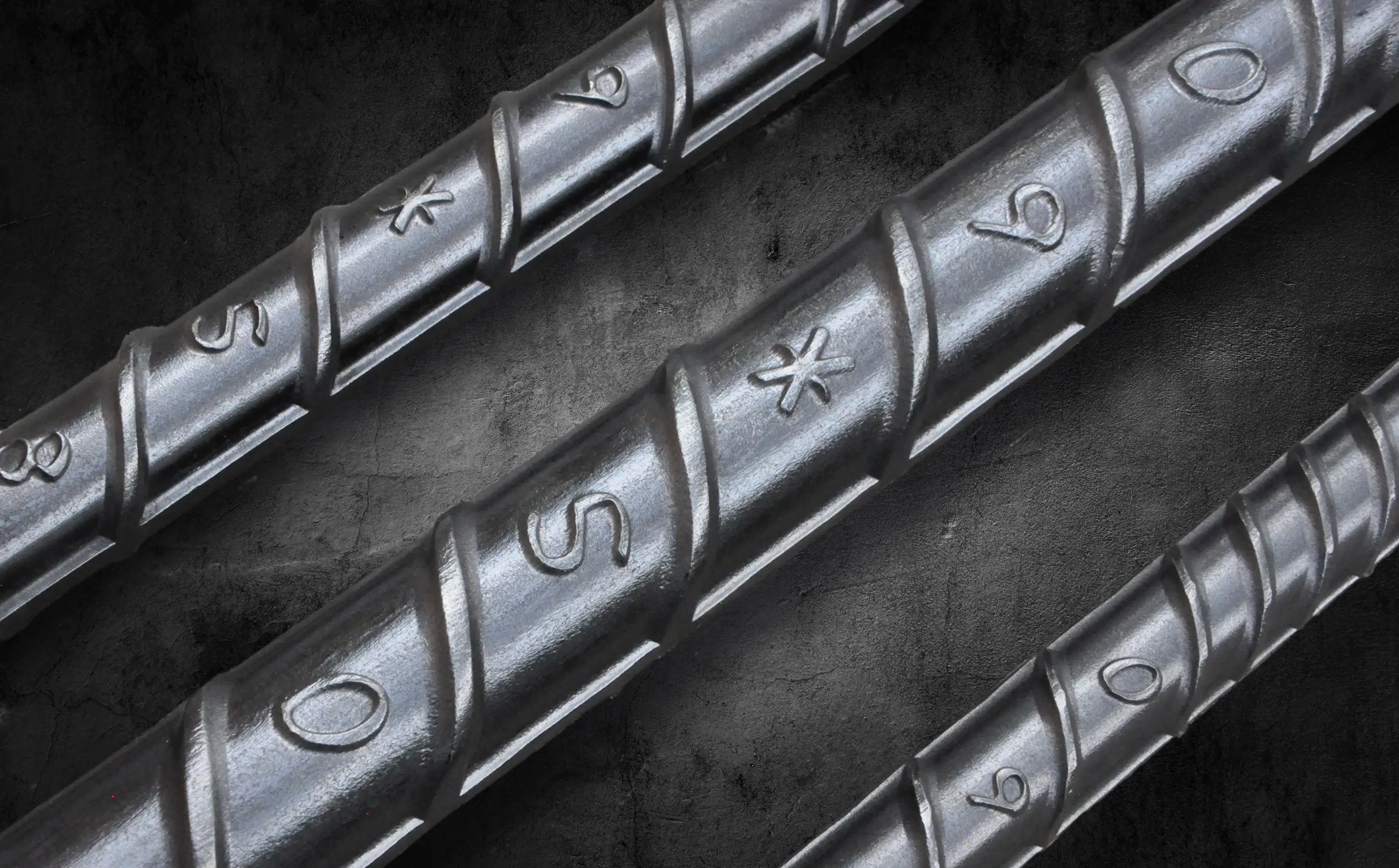
CryoSteel® – The cure for the uncommon cold
When structures must perform in extreme cold, ordinary reinforcing steel isn’t enough. CryoSteel® is a specially engineered rebar designed to deliver reliable strength and ductility in the harshest cryogenic environments. Produced exclusively by CMC in the U.S., CryoSteel® meets the rigorous demands of LNG storage tanks and other low-temperature applications. Scientifically engineered and thoroughly tested, CryoSteel® gives designers and builders the confidence to push boundaries— without compromising performance.

WHY CRYOSTEEL®
Engineered and proven for extreme cold
Designed for cryogenic environments and independently tested down to -274°F (-170°C) to exceed demanding strength and ductility requirements.
The only domestic solution
Produced exclusively at CMC’s Arizona micro mill, CryoSteel® is the only domestically manufactured carbon steel rebar that meets the design criteria for LNG storage tanks and other cryogenic applications.
Built to your specifications
CMC tests CryoSteel® to the exact design temperature required for your project.
A turnkey supply solution
From production to fabrication and delivery, CMC provides a single-source cryogenic reinforcement solution.
Faster, more flexible supply
Domestic production, smaller lot sizes, and jobsite delivery help reduce lead times and ordering overages.

CryoSteel® rebar is designed for LNG and ethylene tanks, LPG tanks or other structures exposed to temperatures down to -274°F (-170°C). It is produced in imperial units and is available in any specified length from 20 feet, to 60 feet, in one-inch increments (40 feet maximum for international shipments).
SPECIFICATIONS
EN14620-3 Annex A3 (ACI 376)
ASTM A615 Grade 60*
(60,000 PSI/420 MPa)
*CMC will guarantee the 500 MPa minimum
that iscommonly specified internationally
(at room temperature).
SIZES
Rebar #4 (13mm)
Rebar #5 (16mm)
Rebar #6 (19mm)
Rebar #8 (25mm)
Rebar #9 (29mm)
Rebar #10 (32mm)
With CryoSteel® you are assured that all specifications are met through rigorous testing with certifications issued for each heat delivered. Testing is performed to ACI 376-11 “Code Requirements for Design & Construction of Concrete Structures for Containment of Refrigerated Liquefied Gases” and BS EN 14620-3:2006 Annex A.3 for reinforcing steel for the “Design and manufacture of site built, vertical, cylindrical, flat-bottomed, steel tanks for the storage of refrigerated, liquefied gases with operating temperatures between 0 deg. C and -170 deg. C. Part 3: Concrete Components.”
Tensile tests are carried out under cold conditions (at cryogenic design temperature). The cryogenic design temperature is determined by the project engineer to be the lowest possible temperature to which the bar would be exposed. Maximum allowable variation between cryogenic design temperature and actual testing temperature is +/- 5ºC. Maximum allowable temperature variation along the specimen length is +/- 5ºC.
NSR =
Tensile strength of notched bar 0.2% proof stress of un-notched bar
or:
NSR = Tensile strength of notched bar
Lower yield stress of un-notched bar
A NSR value of 1 or greater is required to achieve acceptable toughness.
The test specimen for notched bar tests is notched at the half-length position between the machine grips. A V-notch has an internal angle of 45° and a radius at the base of 0.25 mm. Machining techniques and tolerances are in accordance with EN 10045-1. For longitudinal
ribbed bars, the notch is placed across the rib and penetrates 1 mm into the underlying bar.
Each un-notched specimen demonstrates a plastic elongation of at least 3% when tested at cryogenic design temperature. The plastic elongation is the permanent increase in length of the original gauge length after tensile test is completed, expressed as a percentage of the original gauge length.
The yield strength of the un-notched specimen when tested at cryogenic design temperature is at least 1.15 times the minimum specified yield strength.