Example Here

Engineered compression. Built-in confidence.
Post-tensioning improves concrete performance by applying compressive forces through high-strength steel tendons—reducing cracking, controlling deflection, and enabling longer, more efficient spans. It’s a proven solution for slab-on-grade foundations, elevated decks, parking structures, and commercial construction.
CMC fabricates unbonded post-tension cable systems designed for precision, reliability, and jobsite efficiency. Each tendon features a seven-wire strand encased in a protective sheath and anchored after curing to create a durable, tensioned reinforcement system. Our PTI-certified facilities ensure consistent quality and dependable supply.

Why CMC Cable
Engineered support from day one
Our dedicated in-house engineering team supports delegated and full PT system design, layout drawings, sequencing, and value engineering. We help reduce coordination issues before they reach the field—so your project stays on track.
Integrated rebar and PT solutions
With the ability to bundle reinforcing steel and post-tension cable packages, CMC simplifies procurement and streamlines jobsite coordination. One partner. One schedule. Greater efficiency.
Reliable supply, regional strength
PTI-certified fabrication facilities and a growing regional footprint ensure dependable production and delivery. From slab-on-grade foundations to large elevated decks, we scale to meet your demand.
Flexible service models
Whether you need supply-only tendon delivery or a full supply-and-install solution, our team adapts to your project structure, geography, and crew capabilities.
Problem-solving beyond the cable
When challenges arise, our expertise extends beyond materials. With deep experience in structural performance and restoration, CMC is a trusted resource when precision and accountability matter most.
Expert help every step of the way
Our team has completed thousands of projects in advanced construction technology. We are proud to have engineered numerous high-profile construction and restoration projects in select markets.
Whether you are beginning construction or have a property needing restoration, CMC Cable can help. Our engineered services offer a full range of professional construction services.*
* Engineering services provided by qualified partners in North Carolina.
Our in-house support services
Advising Pour Layout and Sequencing
Our engineering teams can advise cost-effective pour layout and sequencing through
design value engineering.
Design During Pre-construction
CMC offers preliminary designs for rebar and post-tensioning material and labor
for new construction.
Design-Build is Executed with Maximum Economy
We can provide negotiated fast-track and design-build projects that are assembled early.
Our national team can collaborate to provide the most efficient and economical solutions for any project.
Strengthening and Adaptive Reuse Solutions
Our engineers can work with consultants to design strengthening solutions for old or new
buildings, applying their significant knowledge of building code reviews.
Value Engineering for Substantial Cost Savings
We can review plans and specs and make cost and time-saving adjustments for construction and restoration.
Historic preservation is a challenging and rewarding process. Terra-cotta, limestone, travertine, concrete, marble, granite, and brick can all be restored by specialized work teams. Our teams are expertly qualified to assist in historic preservation.
Strength at every level
Elevated post-tensioning construction from CMC delivers high-performance concrete solutions for above-grade structures, using our PT cable to increase span capacity, reduce slab thickness, and improve control of potential cracking. Our systems are designed to optimize structural efficiency without sacrificing strength, while supporting faster construction and material savings.
Backed by our extensive expertise in supporting building construction, our elevated PT solutions can help to meet the demands of multi-level structures where strength, durability and performance are essential.
Applications
- Multistory office buildings
- Parking garages and structures
- Multi-family residential apartments/high-rises
- Hospitals and medical facilities
- Mixed-use developments
- Other commercial and residential buildings
A Strong Foundation
A post-tensioned slab on grade is a durable and economical alternative to other forms of conventional slab reinforcement. Some of the benefits include faster and more efficient construction schedules and less concrete and rebar potentially needed, resulting in savings.
Post-tensioning imparts an internal compressive force into the concrete. This increases resistance to deflections and cracking caused by expansive soil problems such as lift, shrinkage, or swelling due to temperature or moisture changes.
Providing better quality with lower costs, CMC Cable’s post-tensioning systems assure superior, lasting, high-quality surfaces and can improve performance and durability for a wide variety of applications:
- Single Family Residential Slab On Ground
- Multi-family Residential Slab On Ground
- Industrial and Commercial Floors
- Super Flat Warehouse and Industrial Floor Slabs
- Mat Foundations
- Tennis Courts / Recreational Surfaces
- Tilt Wall Panels
Advanced Construction
Our advanced construction provides structural strengthening and control solutions. CMC Cable engineered services can provide slab-on-grade solutions for numerous buildings, facilities and foundations.
We have the right supplier network capability to keep our post-tensioned concrete slab cost low. We have the experience to install post-tension slab sections, tension cable in slabs and more. Our dedicated engineers and project management teams will ensure that your process is executed perfectly from start to finish.
A safe barrier
CMC Cable offers barrier cables for parking garages and other structures. Barrier cables require exactitude and expert implementation because pedestrian safety and your business liability are at stake.
We have been hired by businesses nationwide to implement expert barrier cable systems. Our work also includes fencing systems, barrier cable retrofits, code upgrades, restoration, replacement, and specialty services.
We offer a full range of barrier cable services, including fabrication in a PTI-certified plant, along with white-glove delivery, design, supply and installation in select markets, engineering support, and field services.
* Engineering services provided by qualified partners in North Carolina.
Barrier cable types and sizes
Barrier cable for parking structures and other large-scale projects must be engineered very specifically. Success starts with the right product. Our barrier cable is most typically a half-inch diameter strand. We can also accommodate other sizes if needed, depending on the project's requirements. Three kinds of barrier cable systems are:
1] Galvanized
2] Plastic coated
The most widely specified coating is Class A-ASTM A475 galvanization. Enhanced coatings include a zinc-aluminum alloy ASTM B750 Galfan, which enhances 3-to-1 corrosion performance.
Whether your goal is aesthetics and function or function alone, CMC Cable can work with you to ensure you
have a solution that meets your project's requirements and provides only the highest safety and security.
Barrier cable anchorage and end fittings
CMC Cable provides standard end anchorages and specialized end fittings. Our qualified engineers understand the exact formulas to ensure our barrier cables can handle the proper force.
Standard end anchorages are utilized where access for stressing is available on the back side of the terminating support. These anchorages may be either recessed into a concrete column or wall or be surface mounted.
Specialized end anchorage components are available where access is not available on the back side of the cable termination. The end anchorage fittings and components may be protected through hot dip galvanizing (ASTM A153) or zinc plating conforming to ASTM B633.
All end anchorages and specialized end fittings allow for back stressing, as the Post-Tensioning Institute (PTI) requires.
Cutting into concrete should only be done under expert guidance. CMC Cable is a premiere provider of concrete scanning and coring services. As leaders in manufacturing and repairing PT cable, our team is highly experienced and qualified. Our concrete services have supported major building, bridge and structure renovations and construction.
Understanding the foundational risks and requirements of concrete coring and concrete scanning is essential.
The risks include:
- Structural Instability
- Security Risks
- Property Damage
- Unanticipated costs and delays
Cable free guarantee
With our Cable Free Guarantee, we will replace or repair any PT cables damaged or broken by the CMC Cable team from coring at no additional cost to the customer. With each repair ranging from $7,000 to $10,000 a cable, you know we take our work quality seriously and are willing to reduce risk, even at our own cost.
Concrete scanning
A concrete scan is a preliminary step to executing a concrete demolition or concrete work. The plumbing, fiber optics, rebar, tension cables, and other items that may be contained within concrete walls must be located. A concrete scanner will provide real-time images to mark the location of these components.
Concrete scanning services can offer image-based detection and protect the utility of items encased in concrete. When construction teams plan a project based on accurate concrete scan images, they will avoid mishaps or delays.
Concrete scanning is commonly performed with a Ground Penetrating Radar (GPR). Whether facing a new construction project or carrying out a renovation, you can’t afford the cost of damage to structurally vital or costly materials. The cutting, coring, and drilling process should be based on the correct data from an effective concrete scan. Ground penetrating radar scanning is a non-invasive and efficient choice to achieve this.
GPR scanning is part of our process. The experts at CMC Cable can read concrete scan images and understand various aspects of a concrete structure. This understanding will inform the project. In concrete scanning, you may detect:
- Concrete reinforcement
- Concrete thickness
- Voids, including air gaps in the concrete slab on grade and more
- Embedded electrical lines and wires
- Fiber optic cables
- Reinforcing steel
Any project, from installing drains to demoing a concrete structure, should begin with a concrete scan.
Concrete corring
A concrete core project is accomplished by removing cylindrical sections of concrete. Core drilling concrete requires highly capable machines and operators. A concrete core drill penetrates the slab with precision. Any inaccuracies can result in high-cost repairs or incredible structural damage.
CMC Cable provides comprehensive engineering and construction work. Our concrete coring work is performed for general contractors, concrete contractors, MEP (mechanical, electrical, and plumbing) contractors, MEP engineers, structural engineers, forensic engineers, and building owners and managers.
Concrete drilling and concrete coring are often performed to enhance structural strength. The process should be dust-free, non-percussive, and give off low noise, making it an ideal choice for active work sites. Holes may be drilled at numerous angles. CMC Cable has knowledgeable teams that can achieve optimal results even in confined spaces or sensitive areas. With minimal disruption and virtually no cosmetic damage, concrete coring has many useful applications.
Our team has decades of experience providing world-class concrete restoration for structures on every scale. Our expert services include a talented group of engineers, specialists and concrete restoration teams. We are highly skilled and understand how to implement best practice work for concrete construction and repair in the markets we serve.
OUR SKILL SET INCLUDES:
Concrete repair
Waterproofing
Wall & deck coatings
Expansion joint systems
Structural strengthening
Historic preservation
Repair and retrofit services
Barrier Cable Repair
FOR STRUCTURES INCLUDING:
Condominiums
Parking garages
Stadiums
Hospitality
Health care
Offices
Industrial
Infrastructure
Marine
Bridges
Post Tension and concrete repairs
We offer post-tensioning work for all types of buildings and projects. CMC Cable leads the industry in this trade. We are highly qualified to mobilize field service techs to address any post-tension tendon issue. Concrete repair work by CMC Cable includes:
- Epoxy injection for crack repairs
- Expansion joint replacement
- Epoxy top coating
A project or structure may need concrete repair for many reasons, including deterioration from chemicals or climate. Corrosive agents can unexpectedly wear away at your structures, weakening or ruining parts of your concrete. Our crews are efficient and can provide service with minimal disruption. Our structural engineers, who work in-house, will certify that structural integrity has been effectively restored.
Inspections
CMC Cable provides consultants and owners inspection services. With our specialized and technical knowledge with post-tensioned concrete structures, the CMC Cable Team can review and assess existing conditions to assist in preparing the budget to repair these deteriorated conditions.
Forensics corrosion & failure assistance
Having in-house Registered P.E's enables CMC Cable to offer innovative, cost-effective engineered solutions for specialized applications and stay on the leading edge of industry innovations. During the past 30 years the CMC Cable Support Team has completed projects centered around advanced construction technology systems and services.
How it Works
1
Cables are placed
inside the forms
Before concrete is poured,
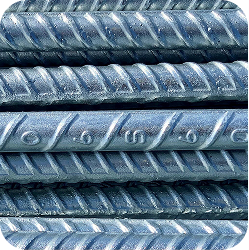
high-strength steel cables (called tendons) are laid inside the slab or beam forms.They sit inside plastic ducts or sleeves and follow a planned profile (often slightly curved). At this stage, they are not tight.
2
Cables are placed
inside the forms
Before concrete is poured,
high-strength steel cables (called tendons) are laid inside the slab or beam forms.They sit inside plastic ducts or sleeves and follow a planned profile (often slightly curved). At this stage, they are not tight.
3
Cables are placed
inside the forms
Before concrete is poured,
high-strength steel cables (called tendons) are laid inside the slab or beam forms.They sit inside plastic ducts or sleeves and follow a planned profile (often slightly curved). At this stage, they are not tight.
4
Cables are placed
inside the forms
Before concrete is poured,
high-strength steel cables (called tendons) are laid inside the slab or beam forms.They sit inside plastic ducts or sleeves and follow a planned profile (often slightly curved). At this stage, they are not tight.
Post-tension systems
Leveraging the latest extrusion technology, our tendons boast high-density, abrasion-resistant polyethylene sheathing. All unbonded post-tension tendons are fabricated per our PTI Certified Plants’ governing ASTM and PTI Standards.
Tailored for aggressively corrosive environments like coastal areas and parking garages exposed to de-icing salts, this system offers impeccable protection against the elements. CMC uses plastic-coated anchorages, 60 mil plastic sheathing, and positive locking connection tubes and end caps, ensuring complete isolation of the wedge cavity and strand from corrosive elements.
Perfect for unique construction and geotechnical applications.
An advanced, engineered product that ensures structural integrity and safety. It is ideal for flat plate slabs and reduces installation time and cost savings. Reduced installation time translates into reduced labor costs and faster hourly turnaround time.
Using the design guidelines of ACI 421.1R99, Shearails™ can eliminate the need for shear capitals, significantly reducing formwork costs and allowing the use of fly forms. The large 10:1 head-to-stem cross-sectional area ratio provides superior anchorage, allowing full utilization of the stud material.
Why Shearails™?
Punching shear is a potentially significant issue that can arise in concrete slabs. It's important during the design phase to consider punching shear and how to minimize the likelihood of its occurrence.
Public Life Safety is Enhanced! Structural failures due to inadequate moment capacity usually exhibit advanced warning signs such as excessive slab deflections and concrete cracking. These warning indicators provide notice, and the structure can be evacuated, shored, and stabilized to secure public safety. Punching shear capacity failures are abrupt and usually catastrophic and can lead to a progressive failure collapse and severe loss of life.
Product Specifications
ShearailTM Studs:
- Yield Strength: 51,000 psi minimum
- Tensile Strength: 65,000 psi minimum
- Elongation: 20% in 2 inches minimum
- Reduction of Area: 50% minimum
ShearailTM Rails:
- Yield Strength: 44,000 psi
- Tensile Strength: 65,000 psi minimum
- Elongation: 20% in 8 inches minimum
- Reduction of Area: 50% minimum
More Information On PT Cable
- The Importance of Understanding the Depth of Post-Tension Cables
- Exploring the Advantages of Post-Tensioned Slab Reinforcement
- Can a Post-Tension Slab Be Repaired?
- Ultimate Parking Garage Maintenance Checklist
- Maximizing Safety and Efficiency by Concrete Scanning Before Concrete Coring
- Concrete Scanning is Essential Before You Start Construction
- Barrier Cables: When and How to Use Them
- How Concrete Scanning and Coring Enhance Building Inspections
- The Unbreakable Bond Between Concrete and Steel
- Maintaining Post-Tensioned Concrete Structures for Longevity
- Ensuring Concrete Integrity with Advanced Strengthening Methods
- The Green Side of Concrete: A Sustainable Resource for the Ages